
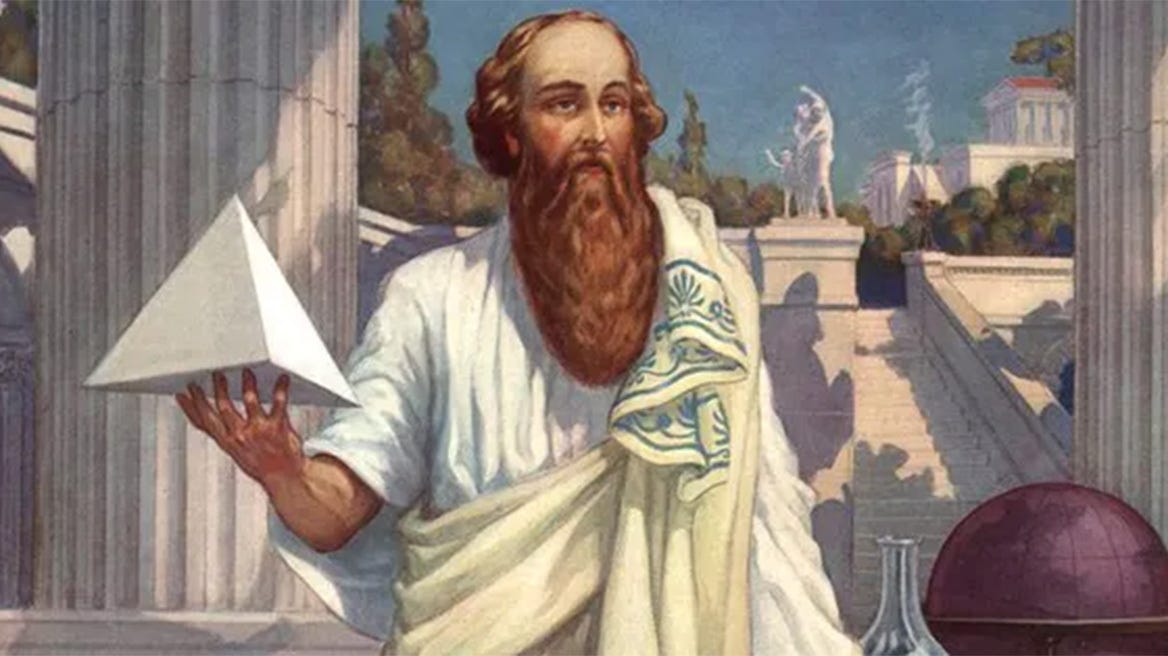
Pythagoras And The Numerology That Never Existed
Let us put an end to a confusion that has survived for centuries simply because no one dared to confront it. Countless people repeat, almost mechanically, that “Pythagoras created numerology.” They teach it, they commercialize it, they defend it with the naïveté of someone who never opened a single serious historical document.
But the truth is simple, sharp, and inescapable:
Pythagoras did NOT create numerology.
Full stop. Enough of this romanticized misinformation.
The Myth of Pythagorean Numerology: What Pythagoras Really Taught
Pythagoras was a mathematician, a philosopher, and above all, a mystic scientist of harmonics. He studied the structure of number, not the destiny of the human being through numbers. He decoded proportions, geometric laws, the music of the spheres — yes. But did he write a system that reduces names to digits and promises personality analysis? Absolutely not.
There is not a single reliable document proving that he created Numerology. Not one.
And this is not opinion.
This is historical fact.
There is nothing in the writings of his disciples.
Nothing in the texts of his biographers.
Nothing in the surviving material from the Pythagorean school.
Pythagoras left us the Ten Laws, the Golden Verses, and a collection of philosophical aphorisms rooted in ethics, mathematics, and the harmony of existence. But no numerology system. No reduction of names to digits. No personality charts. No destiny readings. Absolutely nothing resembling what modern “Pythagorean numerology” claims.
So where did this idea come from?
Simple.
Centuries after his death, later authors — lacking authority and desperate to validate their numerical curiosities — invoked Pythagoras’s name. They grafted their own numerical interpretations onto his legacy, creating a system he never conceived, never taught, and never endorsed.
“If Pythagoras had created a numerology system, the ancient world would have guarded it like gold. But there is no trace — because it never existed.”
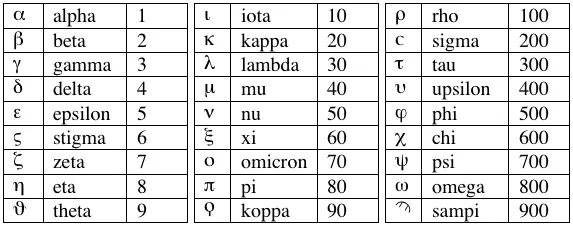
In antiquity, Greek letters did in fact have numerical values that looked like this:
What Pythagoras truly studied was the mathematical structure of the universe: harmonic ratios, geometric truths, the music of the spheres. He revealed the mathematics behind cosmic order.
But he never created a metaphysical system to decode personal destiny.
“Pythagorean numerology,” as it is marketed today, is a construction made many centuries after Pythagoras’s death, stitched together by people who desperately needed a famous name to legitimize their numerical speculations. A borrowed label. A forged signature.
“If you want to honour Pythagoras, study mathematics. If you want to understand destiny, study Kabbalah.”
Because here lies another uncomfortable truth:
The only numerological system with structural coherence — truly symbolic, metaphysical, and rooted in ancient tradition — is Kabbalistic Numerology.
Only Kabbalistic Numerology has an authentic initiatory lineage, metaphysical foundation, and structural coherence.
Where Pythagoras saw ratios, the Kabbalists saw creation.
Where he studied the harmony of strings, the Kabbalists studied the harmony of the universe itself.
Where he touched the threshold, they crossed the entire temple.
It is not disrespectful to Pythagoras to say this; it is respectful.
It frees him from a responsibility that never belonged to him.
He never invented life-path numbers.
He never assigned meanings to digits.
He never claimed that your name determines your destiny.
These attributions were imposed later, with no methodological backbone, no metaphysical architecture, no initiatory lineage.
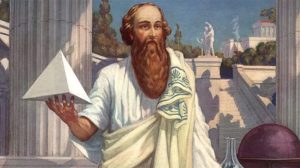
Kabbalistic Numerology comes from the same sacred stream that birthed the Tree of Life, the Hebrew letters, and the metaphysical architecture of the universe itself. Every number carries divine intention — not an invented human interpretation.
And that is why, when someone moves from “Pythagorean numerology” to the Kabbalistic system, they feel it immediately:
The difference between a borrowed coat of authority
and a genuine sacred science.
One is a house built on sand.
The other stands on the foundations of the universe.
So let the record be set straight — not with arrogance, but with the force of truth:
Pythagoras opened the door to the mystery of number. Kabbalah walked through it and revealed what lies beyond.
Let us honour Pythagoras — the true Pythagoras — by giving him back what is his, and by removing what was never his:
**Pythagoras revealed the mathematics of the cosmos.
Kabbalah reveals the destiny of the human being.**
One opens the door.
The other leads you inside the temple.
FAQ
Did Pythagoras create numerology?
No. There is no historical evidence — not from his students, biographers, or philosophical writings — that Pythagoras created a numerology system. Modern “Pythagorean numerology” was attributed to him centuries later.
What did Pythagoras actually teach?
Pythagoras taught mathematics, harmonic laws, geometric principles, ethical aphorisms, and the spiritual structure of proportion — but not personal numerological analysis.
Where does real numerology come from?
Authentic numerology with metaphysical structure comes from the Kabbalistic tradition, rooted in Hebrew letters, the Tree of Life, and centuries of esoteric lineage.
Why is ‘Pythagorean numerology’ still so popular?
Because attaching a famous philosopher’s name gives authority. It is a modern reinterpretation, not an ancient teaching.
Is Kabbalistic numerology more accurate?
Kabbalistic numerology is the only system with cosmic architecture, symbolic lineage, and true metaphysical coherence — not an attribution created after the fact.
Keep reading:
- How Names Shape Life – The Arcana in Kabbalistic Numerology
- FREE 2026 Personal Year and Month PDF Guide
- Understanding Your Personal Year in Kabbalistic Numerology
Other: About Pythagorean Numerology






No Comments